Update Tagline
 Update About
 Update City Info
 Update Display
 Explore Rooms & Locations
 Subscribe & Follow to Earn Points
 Check Out Leaderboards
 Choose Your Persona



Check out our latest post on EscaperX: Top Escape Room Themes 2026: The Ultimate Guide to This Year's Most Immersive Adventures on EscaperX!
Or copy the message and link:
Link copied!
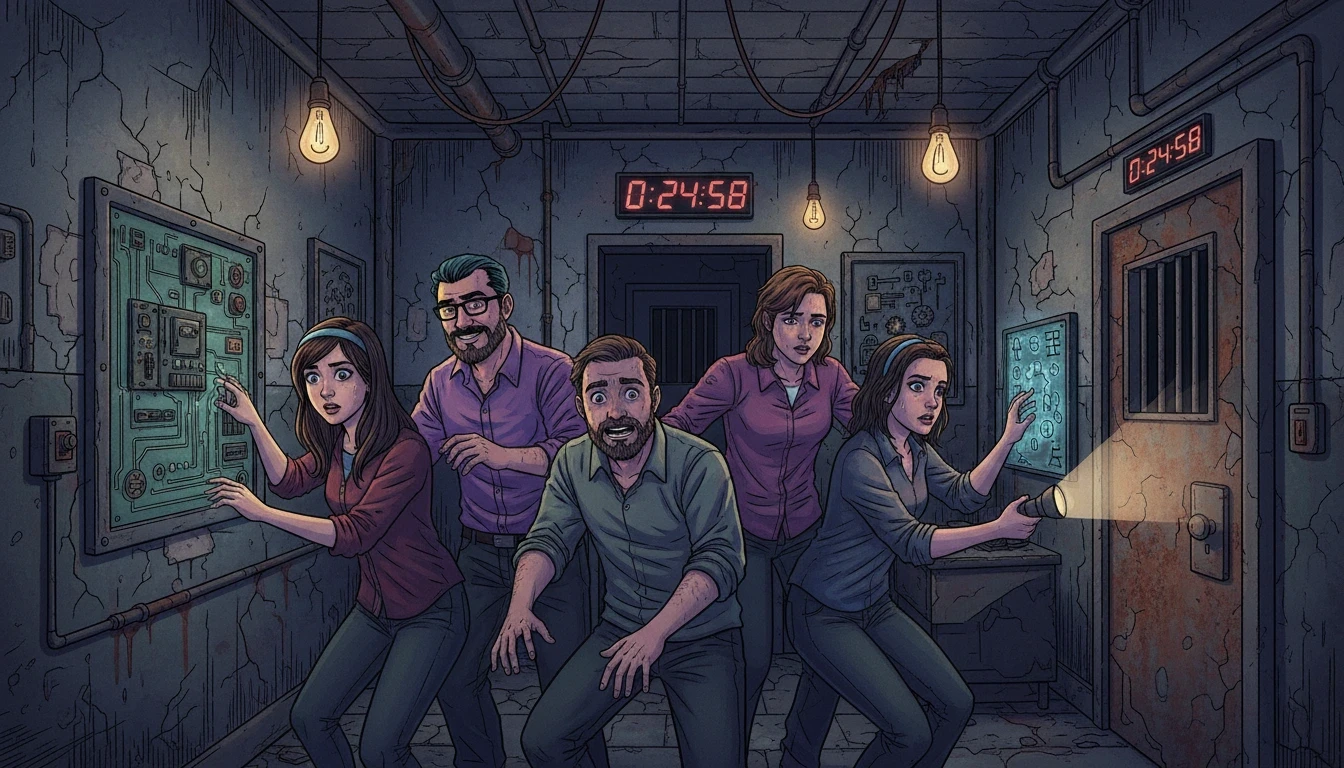
Discover 2026’s top escape room themes, immersive adventures powered by cinematic storytelling and cutting-edge tech.

Scan to subscribe to EscaperX Blogger and Earn Points!.

Discover 2026’s top escape room themes, immersive adventures powered by cinematic storytelling and cutting-edge tech.


The lights dim, your heart races, and a clock starts ticking somewhere in the darkness. You're locked in a world that feels almost too real. Welcome to the cutting-edge world of escape room themes in 2026 – where technology meets storytelling, and every puzzle could be your key to freedom.
If you're hunting for the most thrilling, innovative, and mind-bending escape room experiences this year, you've landed in exactly the right place. The escape room industry has transformed dramatically, and 2026 brings themes that blur the line between reality and imagination in ways you've never experienced before.
.webp)
.webp)
This comprehensive guide speaks directly to you if you're:
An escape room enthusiast craving your next adrenaline rush and looking for fresh challenges that push beyond the traditional locked-door concept. A corporate event planner searching for team-building activities that actually engage your employees rather than bore them to tears. A birthday party host who wants to give guests an unforgettable experience they'll talk about for months. A first-timer curious about what makes escape rooms the fastest-growing entertainment trend, with the global market projected to reach $38.33 billion by 2032.
Whether you're a seasoned puzzle-solver or someone who's never stepped into an escape room, understanding the hottest themes of 2026 will help you choose experiences that match your thrill level, interests, and group dynamic perfectly.
Here's the reality: escape rooms aren't what they used to be. Gone are the days of simple padlocks and hidden keys. The escape room themes dominating 2026 represent a quantum leap in immersive entertainment.
The problem many enthusiasts face right now is overwhelming choice combined with outdated expectations. You might walk into a room expecting old-school puzzles, only to find yourself transported into a fully interactive world powered by augmented reality, artificial intelligence, and sensory technology that responds to your every move.
.webp)
The opportunity you can't afford to miss is experiencing these revolutionary themes before they become mainstream. Early adopters get the freshest storylines, the most innovative technology, and bragging rights that come with being first to conquer cutting-edge challenges.
The escape room industry has invested heavily in theme diversification. Today's top venues blend historical authenticity, fantasy immersion, psychological thrills, and sci-fi innovation with technology that makes Harry Potter's wizarding world look like child's play.
.webp)
Let me paint you a picture of urgency: The escape room market is growing at a staggering 14.8% annually. What does that mean for you? It means the most innovative rooms are booking up months in advance. The themes that define 2026 won't be around forever – many venues rotate experiences every 12-18 months to keep things fresh.
Here's why timing matters:
Trust and quality are at an all-time high. After years of trial and error, escape room operators have perfected the balance between challenge and enjoyment. The themes launching in 2026 benefit from this collective wisdom, offering experiences with 90%+ satisfaction rates.
The fear of missing out is real. Your friends, colleagues, and family members are already discovering these immersive adventures. Social media buzzes with escape room victories, and you don't want to be the one who hasn't tried the viral themes everyone's raving about.
Personal growth through play matters more than ever. In our screen-saturated world, escape rooms offer something precious: genuine human connection through shared problem-solving. The themes of 2026 emphasize collaborative challenges that strengthen relationships and build real-world skills.
The emotional payoff is massive. There's nothing quite like the rush of solving that final puzzle with seconds left on the clock. The relief, the excitement, the mental satisfaction – these experiences create memories that last far longer than dinner and a movie.
Step into the future – the dark, thrilling, and slightly terrifying future. Sci-fi dystopian themes have exploded in popularity, offering experiences where technology isn't just a tool but becomes part of the narrative itself.
What makes this theme special: These rooms incorporate augmented reality elements that transform physical spaces before your eyes. One moment you're in a sterile laboratory; the next, your AR glasses reveal hidden corridors and holographic messages from resistance fighters.
.webp)
Who loves this theme: Tech enthusiasts, sci-fi fans, and groups who appreciate cerebral challenges with high production value. These rooms consistently score the highest ratings, with players praising the seamless blend of physical and digital puzzles.
Real-world example: Imagine being trapped in a malfunctioning space station where you must repair critical systems while AI-controlled security protocols hunt your team. The room uses motion sensors, dynamic lighting that responds to your actions, and puzzles that require genuine teamwork across different virtual environments.
Why it's trending: The integration of virtual reality and augmented reality technologies has made these experiences more accessible and affordable. Approximately 41% of escape room operators now use AR/VR elements, making sci-fi dystopia themes feel authentic rather than gimmicky.
.webp)
Horror-themed escape rooms remain the second most popular category, but 2026 takes psychological terror to new levels. These aren't your grandmother's haunted houses – they're sophisticated experiences that play with your perception, fears, and sense of reality.
What makes this theme special: Modern horror rooms focus on atmosphere and psychological tension rather than cheap jump scares. Expect unsettling soundscapes, subtle environmental changes, and narrative twists that leave you questioning what's real.
The emotional trigger: There's something primal about confronting fear in a controlled environment. These rooms give you the adrenaline rush of a horror movie while maintaining safety – you know nothing can actually hurt you, but your brain doesn't always agree.
Perfect for: Thrill-seekers, horror movie fans, and groups looking for an intense bonding experience. Studies show that shared fear experiences strengthen social connections and create powerful memories.
What to expect: Abandoned asylums with patient files that seem too specific to your own life. Haunted mansions where family portraits watch your every move. Cursed archaeological sites where ancient spirits communicate through increasingly desperate puzzles.
Pro tip: These rooms often use actors and live performers to amp up the intensity. If you're easily frightened, many venues offer "lights on" versions with reduced scares but the same challenging puzzles.
The adventure theme remains the reigning champion of escape rooms, and for good reason. These experiences tap into our deepest desires for discovery, treasure, and Indiana Jones-style escapades.
Why adventure themes dominate: They offer universal appeal. Adventure rooms successfully blend historical elements, fantasy storytelling, and physical challenges that work for all age groups and skill levels.
Market dominance: Adventure-themed rooms capture the largest market share because they're versatile enough for corporate team-building while remaining exciting enough for birthday parties and date nights.
.webp)
Multi-era time travel adventures: where solving puzzles in ancient Egypt unlocks clues in medieval castles. These rooms use seamless set transitions and holographic effects to transport you across centuries.
Underwater archaeological expeditions: featuring simulated deep-sea diving with pressure-sensitive puzzles and bioluminescent creatures that reveal hidden messages.
Lost civilization discoveries: that combine real historical mysteries (like Atlantis or El Dorado) with fantastical elements, creating narratives that feel both educational and thrilling.
The sensory experience: Feel the simulated desert heat as you excavate ancient tombs. Hear the echoing drips in underground caverns. See artifacts that look museum-quality but hide mechanical secrets.
Who thrives here: Families with diverse age ranges, history buffs, puzzle enthusiasts, and groups who want excitement without extreme horror or violence.
.webp)
Here's a trend that's catching fire: comedy-themed escape rooms. In a world that often feels heavy, these experiences offer pure, stress-free entertainment that leaves you laughing as much as thinking.
The rise of comedy rooms: Data shows comedy themes lead the pack for first-time escape room players. Light-hearted scenarios like "What the F#@! Happened Last Night" and "Blackout" attract people who might feel intimidated by darker themes.
Why laughter matters: These rooms recognize that entertainment should be fun, not frightening. The puzzles remain challenging, but the atmosphere stays playful, making them perfect for groups with mixed comfort levels.
Chaotic chronicles: Waking up after a wild bachelor/bachelorette party with no memory of the previous night and 60 minutes to piece together what happened before your wedding starts. Infiltrating a quirky cat kingdom where feline overlords have taken over and only your team can restore the natural order. Being shrunk down to miniature size in a mad scientist's laboratory and navigating household objects that now tower over you.
The appeal: No one leaves traumatized. Everyone leaves entertained. These rooms prove you don't need horror or high stakes to create memorable experiences.
Channel your inner James Bond or Ocean's Eleven crew. Spy and heist themes have evolved dramatically, incorporating real-world security systems, laser grids you actually navigate, and mission objectives that feel pulled from thriller movies.
What makes heist themes irresistible: They flip the traditional escape room script. Instead of getting out, you're breaking in. This psychological shift changes how you approach puzzles and creates unique problem-solving opportunities.
Technology integration: Modern heist rooms use RFID technology, biometric scanners, motion-detection systems, and sophisticated alarm mechanisms that players must actually disable, not just pretend to work around.
.webp)
The team dynamic: These rooms naturally distribute roles. Someone monitors security cameras, another cracks safes, a third coordinates timing. Success requires genuine coordination, making them exceptional for corporate team-building.
Scenarios you'll encounter: Infiltrating a high-tech vault to steal back stolen artifacts before security guards complete their rounds. Disarming security systems in an embassy to retrieve classified documents that prevent international incidents. Pulling off the perfect casino heist while avoiding pit bosses, cameras, and suspicious dealers.
The satisfaction factor: Successfully completing a heist room delivers an enormous sense of accomplishment. You've outsmarted sophisticated systems, worked as a cohesive unit, and pulled off the impossible.
.webp)
Magic isn't dead in 2026 – it's thriving in escape rooms that transport you to enchanted forests, wizard academies, and mythical kingdoms where anything feels possible.
The fantasy advantage: These themes offer the most creative freedom for designers. Without real-world constraints, rooms feature impossible physics, talking portraits, spell-casting mechanics, and creatures that react to your choices.
Who's drawn to fantasy: Fans of Harry Potter, Lord of the Rings, and Dungeons & Dragons find these experiences particularly rewarding. But you don't need existing fantasy knowledge to enjoy rooms designed for universal appeal.
Interactive spell-casting systems where your gestures and words trigger real effects in the room. Wave a wand with the right motion, and hidden compartments open or magical barriers dissolve.
Character-based progression where players assume roles like wizard, warrior, or rogue, with puzzles tailored to each character's unique abilities.
Living environments that change based on your decisions. Help the forest spirit, and vines create bridges. Anger it, and pathways close off.
The emotional journey that change based on your decisions. Help the forest spirit, and vines create bridges. Anger it, and pathways close off.
History comes alive in escape rooms that recreate specific eras with painstaking accuracy, from Victorian London to Wild West saloons to 1980s spy headquarters.
The appeal of historical themes: They offer education disguised as entertainment. You'll learn about historical events, cultural details, and period-appropriate technology while solving puzzles that feel authentic to the era.
.webp)
Victorian detective mysteries where you follow in Sherlock Holmes' footsteps through fog-shrouded London streets, using period-appropriate forensic techniques.
Ancient Egyptian tomb explorations featuring hieroglyphics you must actually decipher and mechanisms based on real archaeological discoveries.
World War II resistance missions where you work as underground operatives, using authentic code-breaking techniques and period communications.
Cold War espionage set in divided Berlin, complete with hidden microfilm, radio transmitters, and tense encounters with secret police.
The learning experience Many venues partner with historians to ensure accuracy. You'll leave knowing more about the era than when you entered – and you'll have had a blast doing it.
.webp)
The world has ended, and only your team's problem-solving skills stand between survival and becoming another statistic. Post-apocalyptic themes tap into our fascination with end-of-world scenarios while testing resource management and quick decision-making.
Why survival themes resonate: They combine urgency with creativity. Limited resources force innovative solutions. Every choice has consequences that ripple through the experience.
Zombie outbreaks where you must find the cure while infected hordes (actors or high-tech animatronics) create genuine tension and time pressure.
Nuclear fallout shelters where malfunctioning life support systems require repair using salvaged materials and improvised engineering.
Pandemic containment (yes, we can laugh about it now) where you're medical researchers racing to develop a vaccine from limited samples.
Environmental collapse scenarios where climate disasters have made the surface uninhabitable, and you're activating underground ark protocols.
The team test: These rooms excel at revealing group dynamics. Who stays calm under pressure? Who thinks outside the box? Who keeps morale high? It's team-building with actual stakes (even if those stakes are fictional).
Put on your detective hat. Mystery themes challenge you to solve crimes, analyze evidence, and bring killers to justice using deductive reasoning and forensic skills.
The enduring appeal: Mystery rooms tap into our love of detective stories while making us the investigators. You're not watching Sherlock – you ARE Sherlock.
Modern investigation techniques: 2026's mystery rooms incorporate technology that mimics real forensic tools. UV lights reveal hidden evidence. Chemical reactions help date clues. Digital databases let you cross-reference suspects and alibis.
.webp)
Classic whodunits set in manor houses during dinner parties, where every guest has a motive and opportunity.
Cold case reopenings where you're modern detectives with access to new technology that could finally solve decades-old crimes.
Serial killer psychology rooms where profiling the perpetrator is as important as finding physical evidence.
Art theft investigations combining crime-solving with art history knowledge and black market operations.
The mental workout: These rooms demand attention to detail, logical thinking, and the ability to separate relevant clues from red herrings. They're perfect for groups who prefer cerebral challenges over physical tasks.
.webp)
The newest trend in escape rooms prioritizes narrative above all else. These aren't just puzzle collections with a theme painted on – they're interactive stories where your choices shape the outcome.
What makes story-driven rooms different: Multiple possible endings based on your decisions. Moral dilemmas with no clear right answer. Character development that makes you care about fictional NPCs. Branching narratives that ensure different experiences even on repeat visits.
The emotional investment: When done right, story-driven rooms create genuine emotional responses. You'll feel triumph, loss, hope, and despair as the narrative unfolds around you.
AI-powered NPCs (non-player characters) that respond naturally to your questions and adapt dialogue based on your previous choices.
Environmental storytelling where every detail – from scattered letters to broken furniture – contributes to the larger narrative.
Dynamic music and sound design that shifts with story beats, building tension during crisis moments and releasing it during victories.
The replay value: Unlike traditional escape rooms where the solution remains the same, story-driven rooms offer genuine replay value. Make different choices, discover new endings, and uncover hidden story branches you missed the first time.
Let's talk about the elephant in the room (pun intended): technology has revolutionized how escape room themes come to life. The gap between what designers imagine and what players experience has nearly disappeared.
AR technology overlays digital elements onto physical rooms. Put on AR glasses, and suddenly that blank wall displays scrolling computer code you must hack. That ordinary desk becomes a holographic command center showing enemy positions.
The beauty of AR is how it expands possibilities without requiring massive physical set changes. One room can host multiple themes by switching digital overlays. It's cost-effective for operators and mind-blowing for players.
Some rooms now incorporate brief VR sequences that transport you to locations impossible to recreate physically. Climb Mount Everest to retrieve a mystical artifact. Dive to the ocean floor to disable a bomb. Travel through a microscopic world inside a human body.
These segments last 5-10 minutes typically – long enough to be impactful but short enough to avoid VR fatigue. They're perfectly integrated into larger physical room experiences.
Puzzles now talk to each other. Solve something in one corner, and it triggers changes across the entire room. Lights shift colors. Hidden compartments unlock. Music changes. The environment responds dynamically to your progress.
IoT technology creates sophisticated multi-step challenges where observing connections between seemingly unrelated objects becomes essential. It's puzzle design that feels organic rather than arbitrary.
Here's something truly innovative: AI systems that monitor your team's progress and adjust difficulty on the fly. Struggling badly? The AI might provide subtle hints through environmental changes or NPC dialogue. Blazing through too easily? It ramps up complexity.
This ensures experiences remain in that sweet spot between too easy and impossibly hard, maximizing enjoyment regardless of your skill level.
Feel the rumble of distant thunder. Experience the vibration of ancient machinery activating. Sense the subtle pulse of magical energy. Haptic technology adds physical sensations that make virtual and augmented elements feel tangible.
Some advanced rooms even use temperature controls, scent dispersers, and air pressure changes to create complete sensory immersion.
Now that you know what's out there, how do you select the right theme? Here's your step-by-step guide to making the best choice:
Start with honest conversations: Does anyone in your group have claustrophobia? Are there strong preferences against horror content? Is anyone particularly nervous about technology?
Match themes to comfort zones: First-timers often do best with adventure or comedy themes that offer excitement without intensity. Experienced groups might crave psychological horror or complex sci-fi challenges.
Consider age ranges: Mixed-age groups benefit from adventure or mystery themes with adjustable difficulty. Avoid intense horror if you have anyone under 13 or anyone who expressly doesn't enjoy being scared.
Are you team-building? Choose heist, survival, or espionage themes that require defined roles and coordinated timing. These naturally distribute responsibilities and highlight each person's contributions.
Looking for pure entertainment? Comedy, fantasy, or adventure themes maximize fun without stress. They're perfect for birthdays, date nights, or casual friend gatherings.
Want an adrenaline rush? Psychological horror, survival scenarios, or time-pressure heist missions deliver that heart-pounding intensity you're craving.
Seeking mental challenges? Mystery, crime investigation, or story-driven themes emphasize puzzle-solving and deductive reasoning over physical activity or scares.
Not all escape rooms are created equal: A mediocre horror room feels silly rather than scary. A poorly executed sci-fi room breaks immersion instantly.
Online reviews mentioning production value and whether technology works smoothly. Look for comments about set design quality and attention to detail.
Success rates between 20-50%Too high suggests rooms are too easy. Too low indicates poor design or unclear puzzles.
Response to questions about theme intensity Quality venues clearly communicate what to expect regarding scares, physical requirements, and technical elements.
Photos and videos Visual previews help gauge production quality and whether the theme appeals to your aesthetic preferences.
Prime time slots (Friday/Saturday evenings) book up weeks or months in advance for popular themes. Reserve early or choose off-peak times for better availability.
Weekday afternoon slots often offer discounts and ensure your game master isn't rushed between groups, potentially providing better attention and hints.
Avoid booking immediately after heavily promoted releases. Wait 2-3 weeks for operators to work out any technical kinks in brand new theme launches.
Dress comfortably: Some themes involve crawling, reaching, or moving around extensively. Leave the fancy shoes at home.
Arrive 15 minutes early: This buffer accounts for parking, bathroom breaks, and pre-game briefings without cutting into your actual room time.
Establish team communication norms: Agree to speak up about discoveries rather than solving alone. Decide how you'll handle disagreements about next steps.
Embrace failure as part of the fun: Even if you don't escape, the experience of trying together creates the memories and bonding you're after.
Absolutely. All technology undergoes rigorous safety testing. VR segments are brief to prevent discomfort. Venues maintain emergency procedures and game masters monitor every room. Physical safety standards actually exceed most entertainment venues.
Don't worry. Technology enhances experiences but never requires technical expertise. Everything is designed for intuitive interaction. If you can use a smartphone, you can handle escape room technology. Plus, team dynamics mean tech-savvy members can focus on digital puzzles while others tackle physical challenges.
Prices range from $25-50 per person depending on location, theme complexity, and group size. Tech-forward rooms might cost $5-10 more than basic options, but the enhanced experience justifies the premium. Many venues offer discounts for larger groups or off-peak bookings.
Age recommendations vary by theme intensity. Adventure, comedy, and fantasy themes often welcome ages 8+. Psychological horror and intense sci-fi dystopia themes typically require participants to be 13-16+. Always check specific venue age policies, and remember that kids with escape room experience can handle more advanced themes than first-timers.
Not at all. Every theme offers something for beginners. Game masters provide thorough briefings and can adjust hint frequency based on your experience level. That said, starting with adventure or comedy themes helps you understand escape room logic before tackling complex mystery or survival scenarios.
Most groups don't fully escape on their first attempt – industry success rates hover around 20-30%. Game masters will walk you through the remaining puzzles afterward so you understand the full solution. The journey and teamwork matter more than the outcome. Plus, partial completion still counts as an achievement worth celebrating.
The escape room industry shows no signs of slowing down. Here's what industry insiders predict for the next few years:
Personalized narratives using AI that incorporates details about your group (with permission) into the story, making experiences feel uniquely crafted for you.
Cross-location adventures where teams in different cities solve connected puzzles collaboratively, competing or cooperating toward shared goals across geographic distances.
Extended universe experiences where storylines span multiple visits, with your choices in earlier rooms affecting later installations – think episodic entertainment that builds over time.
Competitive esports-style escape rooms with leaderboards, tournaments, and standardized challenges that let you compare skills against players worldwide.
Therapeutic applications using escape room mechanics for cognitive therapy, team counseling, and educational purposes beyond pure entertainment.
The escape room market's growth trajectory suggests these innovations aren't distant dreams but near-future realities already in development.
You've explored the landscape of 2026's top escape room themes. You understand what makes each category special, who they appeal to, and how technology has transformed the experience. Now comes the exciting part: choosing your adventure.
This week: Gather your intended group and discuss theme preferences. Share this guide to ensure everyone understands options and can express comfort levels honestly.
This month: Research local venues offering your preferred themes. Read recent reviews focusing on production quality and technical reliability. Call venues with questions about specific theme elements or accessibility concerns.
Before your booking: Confirm your team's availability and book your chosen theme at least 2-3 weeks in advance for weekend slots, or 1 week for weekday times. Evening slots during holidays need even more advance notice.
Day of your adventure: Arrive early, dress comfortably, silence your phones, and commit fully to the experience. Remember that whether you escape or not, the memories you create together are what truly matter.
The escape room themes of 2026 represent the pinnacle of immersive entertainment – where storytelling meets technology, where puzzle-solving demands teamwork, and where ordinary people become heroes, detectives, and adventurers for sixty minutes.
Don't let another month slip by watching the clock on the wall. It's time to race against a different clock – one that's ticking inside a world you've never experienced. Your adventure awaits. The door is open. Will you step through?
0 Total Comments


 Back to Blogs