escaperx-favicon

The Mechanic

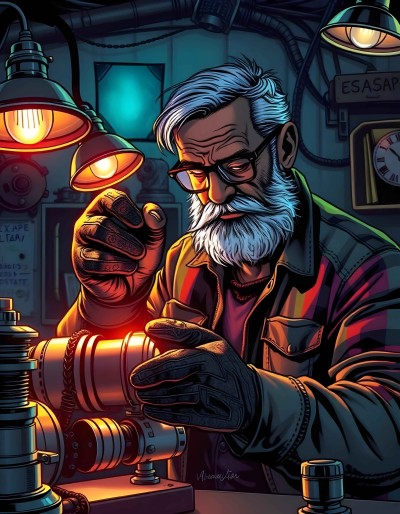
Expert in figuring out mechanical or logic-based puzzles.

Escapers

members
0 Escapers USING THIS PERSONA
QR Code icon

Assign Persona Instantly

Scan the QR code to link and assign this persona seamlessly.
Quick, secure, and effortless your persona is just one scan away.

QR Code

๐Ÿ”ง ๐Ÿงฉ The Mechanic: The Puzzle Solver

Escape rooms are not just about solving puzzles; they are about teamwork, diverse roles, and personalities blending together to achieve a common goal. Among the many personas that emerge in these high-pressure ๐Ÿค, time-bound adventures, The Mechanic stands out as a vital figure. Known for their expertise in handling mechanical or logic-based puzzles, the Mechanic is the team member who thrives on understanding how things work ๐Ÿ” โšก.


In this chapter, we will explore who the Mechanic is, why they are crucial in escape rooms ๐Ÿ’ช ๐Ÿš€, how they operate during games, and what makes them shine. We will also look at practical strategies for players who identify with this persona and want to strengthen their contributions โœจ.

๐Ÿ”ง ๐Ÿงฉ Who Is The Mechanic in Escape Rooms?

The Mechanic is characterized by their hands-on, technical approach to challenges. While some players gravitate toward searching for clues, keeping track of time โณ ๐Ÿ”ฅ, or communicating strategies, the Mechanic is most comfortable in the thick of a puzzle, physically engaging with locks, gears, sliders, or circuitry ๐Ÿ‘ฅ.


They are curious, detail-oriented, and persistent ๐Ÿค”. Instead of being intimidated by a box covered in knobs or a series of strange interconnected levers, the Mechanic’s first instinct is to test, tinker, and deduce how it all fits together ๐Ÿ”ง.


Often, the Mechanic has traits such as:

  • ๐Ÿง˜ Analytical patience: They don’t rush; they take time to observe how things interact.
  • ๐Ÿ›  ๏ธ Practical intelligence: They excel at hands-on trial and error.
  • ๐Ÿค“ Technical curiosity: They want to know why something works, not just how.
  • ๐Ÿ’ช Confidence in puzzles: Even when the team feels stuck, the Mechanic trusts the process.

This makes them the go-to problem solver when the escape room introduces challenges that involve more than just spotting a hidden number on a wall ๐Ÿ”ข.

Craftsmanship glows in morning quiet.
Precision thrives in grease-stained silence.

๐Ÿคท‍โ™‚ ๏ธ ๐Ÿ”ง Why Does a Team Need a Mechanic in Escape Rooms?

Escape rooms are designed with variety in mind. A well-designed room often contains a mix of puzzles wordplay, observation-based tasks, riddles, and mechanical puzzles ๐Ÿ‘€ ๐ŸŽฏ. Without a player who is skilled at handling technical tasks, the team risks wasting precious minutes fumbling with contraptions that require structured thinking ๐Ÿ— ๏ธ ๐Ÿง .

๐Ÿ›  ๏ธ Technical Expertise

Many escape rooms contain locks, dials, magnets, circuitry-based puzzles, or interactive props ๐Ÿงฒ. The Mechanic’s skill ensures these don’t become roadblocks ๐Ÿค– ๐Ÿ—ฃ ๏ธ.

โœ‹ Hands-On Confidence

Some players hesitate to manipulate physical puzzles for fear of breaking something. The Mechanic, however, understands how to safely and effectively test mechanisms ๐Ÿƒ‍โ™‚ ๏ธ ๐Ÿงฉ.

๐Ÿ’ช Problem-Solving Backbone

Their patience prevents the team from abandoning puzzles too quickly. Without them, teams may overlook solvable challenges โณ ๐Ÿ˜Œ.

Efficiency Under Pressure โšก

A Mechanic often works quietly in the background, freeing others to focus on searching or strategizing, which improves overall efficiency โš™ ๏ธ.

๐Ÿ›  ๏ธ ๐Ÿงฉ What Does The Mechanic Do in Escape Rooms?

The Mechanic’s role is both specialized and collaborative ๐Ÿค. Here are their core contributions:

๐Ÿ”ง Solves Mechanical Puzzles

From deciphering gear-based locks to maneuvering sliding-tile puzzles, the Mechanic thrives on tasks that require logical steps โš™ ๏ธ ๐Ÿ”’. They don’t shy away from puzzles others might dismiss as “too complicated.”

๐Ÿ’ก Offers Technical Insights

The Mechanic explains how mechanisms work in a way that helps the entire team. For instance, when faced with a complex lock, they might notice that each rotation controls a different segment ๐Ÿ”’, guiding teammates toward correct input.

๐Ÿค Facilitates Hands-On Problem-Solving

The Mechanic is rarely a solo worker. They encourage teammates to take part in testing solutions, sharing their reasoning so others can follow along ๐Ÿ”ง โœจ. This transforms puzzles into team activities, not solo efforts.

โš  ๏ธ  Troubleshoots Failures

When the team tries a combination that doesn’t work, the Mechanic doesn’t panic. Instead, they backtrack, analyze why it failed, and test new hypotheses. This calm troubleshooting prevents wasted time โžก ๏ธ โœ….

๐ŸŒŸ When Does The Mechanic Shine in Escape Rooms?

โš™ ๏ธ The Mechanic shines in several key moments:

๐Ÿค– When Mechanical Puzzles Arise

Some escape rooms feature central mechanical challenges giant contraptions, intricate gear-based doors, or sliding-wall puzzles. These are often daunting to the untrained eye, but the Mechanic sees them as opportunities ๐Ÿงฑ ๐Ÿ”€.

Ingenuity sparks through brass precision.

โœ‹ During Hands-On Challenges

Escape rooms are becoming increasingly immersive, with physical elements like levers, magnets, or pressure plates. The Mechanic thrives in these tactile moments, bringing precision and patience ๐Ÿ•น ๏ธ.

๐Ÿ˜ค When the Team Feels Stuck

While other teammates may spiral into frustration, the Mechanic’s steady approach restores focus. They remind the team that every puzzle has logic behind it ๐Ÿค” โ“, even if it isn’t immediately obvious.

Mystery unfolds through focused cluework.

๐Ÿ—บ ๏ธ ๐Ÿ”ง Where Does The Mechanic Make the Biggest Impact in Escape Rooms?

The Mechanic’s greatest impact comes in rooms with complex physical designs. For example:

  • โš™ ๏ธ Gear Rooms: Escape rooms that revolve around aligning gears, pulleys, or levers are perfect playgrounds for the Mechanic.
  • โšก Circuitry or Magnet Puzzles: They excel at understanding the flow of energy or the manipulation of hidden magnets ๐ŸŽจ โœจ.
  • ๐Ÿ”ข Combination Locks & Sequential Tasks: While some players grow impatient entering combinations, the Mechanic sees patterns and narrows down possibilities quickly.
  • ๐ŸŽญ Interactive Props: Rooms with unique props like steering wheels, rotating maps, or mechanical safes become far less intimidating with a Mechanic present ๐Ÿ˜Œ ๐Ÿ›ก ๏ธ.

In these environments โš™ ๏ธ โŒ, their skills are not just helpful they are essential for success.

๐Ÿ›  ๏ธ ๐Ÿš€ How Can You Be a Better Mechanic in Escape Rooms?

Even natural Mechanics can improve. Here are strategies to sharpen their persona:

๐Ÿงฉ Engage with Technical Puzzles Outside the Room

Practice puzzle boxes, Rubik’s cubes, mechanical brain teasers, or even Lego Technic sets ๐Ÿ’ช ๐Ÿคฒ. These build familiarity with mechanical logic.

๐Ÿ“š Understand Basic Mechanisms

Study how locks, gears, and levers work. The more you understand mechanical principles, the faster you’ll interpret puzzles under time pressure ๐Ÿง  ๐Ÿ’จ.

๐Ÿค Collaborate Actively

Share your insights. Don’t just solve in silence explain your process so the team feels included and can assist when needed ๐Ÿคฒ ๐Ÿ”ง.

๐Ÿ˜Œ Stay Patient and Persistent

Not every puzzle reveals its solution quickly. Mechanics must avoid frustration and trust their logical progression ๐Ÿง  ๐Ÿ“ˆ.

๐Ÿ“ Reflect After Each Game

After playing, analyze which puzzles you excelled at and where you struggled. Continuous reflection sharpens future performance ๐Ÿ ๐Ÿค”.

Final Thoughts: The Mechanic’s Legacy in Escape Rooms ๐Ÿ›  ๏ธ ๐Ÿ†

In every escape room, there comes a moment when the team faces something beyond codes, riddles, or hidden objects. A gear clicks into place, a hidden drawer resists, a magnetic lock refuses to yield, or a multi-step mechanism requires delicate sequencing โš™ ๏ธ ๐Ÿ”Š. These are not puzzles that can be reasoned out on paper or solved with pure observation they demand patience, tinkering, and a hands-on mind. This is where the Mechanic becomes indispensable ๐Ÿ”’ ๐Ÿงฉ.


The Mechanic is the player who thrives on interaction. While others chase patterns or decode wordplay ๐Ÿค โšก, the Mechanic gravitates toward switches, levers, gears, locks, and wires. Their curiosity draws them to the tactile side of the room, and their persistence ensures that no mechanism is left unexplored. In many cases, the Mechanic is the difference between progress stalling out and the team surging ahead ๐Ÿ” โœ….


The Mechanic is not just a “puzzle solver” they are a translator between design and execution ๐Ÿงฉ โŒ. Escape rooms often include elements that reward patience and spatial reasoning more than abstract logic. A rotating maze box, a pressure plate puzzle, or a sliding-tile lock can baffle the impatient. The Mechanic approaches these challenges methodically ๐Ÿ” โœจ, experimenting, testing, and refining until the mechanism reveals its secret.


Unlike the Puzzle Buster, whose focus is relentless problem-solving across any challenge, the Mechanic has a specific domain: physical problem-solving. They bring comfort with trial-and-error, confidence in their hands, and a calm approach that turns frustration into discovery โœ‹ ๐Ÿ’ช.


Without a Mechanic, teams often hit walls. A stubborn lockbox or misaligned gear can consume valuable time and energy. In frustration, teammates might abandon the puzzle or keep cycling through the same failed approach. A Mechanic, however ๐ŸŽ‰, knows how to break down the challenge, test systematically, and stay patient. Their calmness in the face of resistance prevents frustration from derailing the group ๐Ÿงฑ ๐Ÿ”’.


More importantly, Mechanics create momentum. Every solved mechanism leads to a tangible, satisfying breakthrough  a drawer sliding open, a panel unlocking, a door springing free. These moments energize the team, reminding everyone that progress is being made ๐Ÿ”„ ๐Ÿงช. In a game defined by ticking clocks, Mechanics don’t just solve puzzles; they restore morale.


The Mechanic’s strengths also carry challenges. Their focus on physical puzzles can sometimes make them feel detached from the group’s bigger picture. While they’re buried in gears or switches, the rest of the team may be decoding riddles or hunting for patterns. It’s easy for a Mechanic to become siloed, working independently rather than collaboratively โณ ๐Ÿ”ฅ.


There is also the risk of tunnel vision. Not every tactile element in a room is interactive, and sometimes time is wasted testing or over-analyzing props. The best Mechanics learn to balance their instinct to tinker with a disciplined awareness of when to pivot, ask for help, or hand the puzzle off ๐Ÿ˜  ๐Ÿšง.


So if you find yourself drawn to locks ๐Ÿคฒ ๐Ÿงฉ, gears, switches, and mechanical mysteries, embrace the role of the Mechanic. Your persistence, calm, and curiosity are not just skills; they are gifts โš  ๏ธ. And in the world of escape rooms, they are often the difference between a stalled team and a triumphant one.


The Mechanic reminds us that escape rooms aren’t solved by logic alone. They’re solved by hands and minds working together and when the Mechanic’s steady hands meet the team’s collective ingenuity ๐Ÿšซ ๐Ÿ“‰, no mechanism can stand in the way of escape.

This Persona Awaits Its First Hero!

No oneโ€™s chosen this persona yet โ€” itโ€™s a blank canvas waiting for you to bring it to life.
Be the first to claim it, define it, and inspire others with your unique escape room journey. Ready to make it yours?

More Personas

The Leader

Guides the team with clear direction and decisive actions.

The Competitive

Driven to win, always pushing the team to be faster and better.

The Wallflower

Stays quietly in the background, contributing only when prompted.

The Alarmist

Easily flustered, constantly reminding the team of the ticking clock.

The Thinker

Deliberates carefully before making decisions, focusing on logic.

The Drag Along

Reluctantly participates but follows the team's lead when necessary.

Escaperx Agent